Harpo
The Color PurpleHarpo’s story brings inherited authority into collision with lived care. As Albert’s son, he first asks why his father beats Celie and later seeks advice on making Sofia obey; years afterward, he is the one who cleans and feeds his failing father, holds him through the night, and resumes building a home with Sofia. His relationships do not settle into a simple reversal of the violence he witnessed: they register the costs of trying to rule others and the possibility of closeness rebuilt through practical care.
Identity and Family Background
Harpo is Albert’s son and Sofia’s husband. His family position shapes what he sees and what he initially accepts. When he asks Albert why he beats Celie, Albert justifies the violence by claiming that Celie is his wife and is stubborn. Harpo then asks Celie why she is stubborn, without questioning why Albert considers her his to rule. The exchange exposes how a husband’s authority is treated as self-evident: the burden of explanation falls on the woman resisting him, not on the man who claims power over her.
Harpo’s questions also set him apart from Albert without placing him outside the same structure. He seeks explanations from both his father and Celie, but at first does not challenge the premise that a wife should obey. The result is not simply an inherited attitude stated outright; it is a pattern of looking to male authority for guidance while measuring a woman’s behavior against that authority. His later conflict with Sofia makes that pattern visible in his own marriage.
Marriage to Sofia and the Pursuit of Obedience
Harpo complains to Albert that Sofia does one thing when he tells her another, and that she talks back. He asks what he should do to make her mind. Celie notices that, despite his complaint, he sounds a little proud of Sofia’s defiance. Albert offers no useful counsel; he smokes and remains silent. The scene leaves Harpo caught between wanting the obedience expected of a wife and recognizing, perhaps without admitting it, the force of Sofia’s refusal.
That contradiction has serious consequences. Later, Celie tells Harpo that if he had not tried to rule Sofia, white people might not have caught her. The accusation links domestic control to Sofia’s exposure to a wider system of racial power. When the history of Sofia’s punishment is recounted, it is clear that she had been imprisoned and then made to work in the mayor’s house for eleven and a half years. Harpo’s wish to govern his wife is not the only cause of what happens to her, but Celie identifies it as part of the chain that leaves Sofia vulnerable.
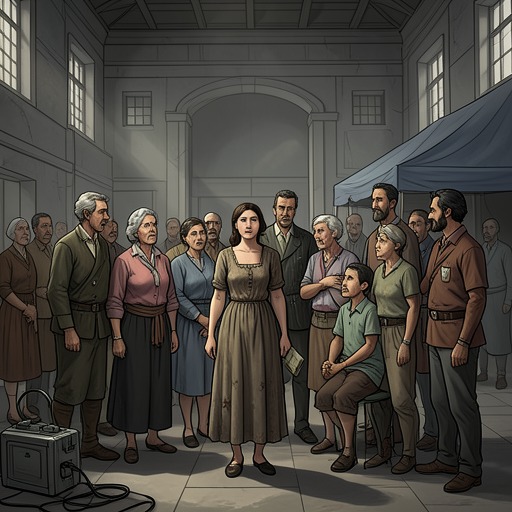
At the family dinner after Sofia’s return, Harpo and Mary Agnes appear to Celie like an old married couple. Sofia sits among relatives who have learned to live without her: her children call Odessa mother and Mary Agnes little mother, while they call Sofia Miss. Harpo is present within this altered family arrangement, not as the uncomplicated center of Sofia’s homecoming but as one member of a household whose roles have changed during her absence. Celie’s rebuke makes him pause; his request that she hold on is answered by her insistence that he had helped create the conditions she is naming.
Work, Children, and Changed Family Roles
Harpo also tries to establish a business. His place offers cold drinks, barbecue, chitlins, and store-bought bread, and signs for Harpo’s are posted on the side of the house and beside the road. The opening brings almost no trade: nobody comes the first week, three or four people arrive the second, and only one comes the third. While Harpo waits behind his small counter, Swain plays. The detail gives the business an uncertain beginning rather than a success story; Harpo has arranged the food and the signs, but the customers do not follow.
The later dinner at Odessa’s home shows how family life has been redistributed while Sofia was away. Odessa and her husband, Jack, raised the children. The children’s names for Odessa, Mary Agnes, and Sofia mark distinct places in their daily lives, and Sofia’s return cannot immediately restore the motherly authority she once had. Harpo’s own relationship with Mary Agnes and their daughter Suzie Q belongs to this changed household. Suzie Q is the child who pays Sofia particular attention, sitting opposite her and studying her face, while most of the others behave as if Sofia were barely present.
Care for Albert and Reconciliation
After Celie leaves, Albert withdraws into a filthy house and refuses to let anyone in until Harpo forces his way inside. Harpo cleans, gets food, and bathes his father, who is too weak to fight him and too far gone to care. This is a decisive change in their relationship: the son who once asked his father how to control a wife becomes the person who takes responsibility for a helpless parent. Harpo’s actions are concrete and domestic, answering Albert’s isolation with food, cleanliness, and bodily care.
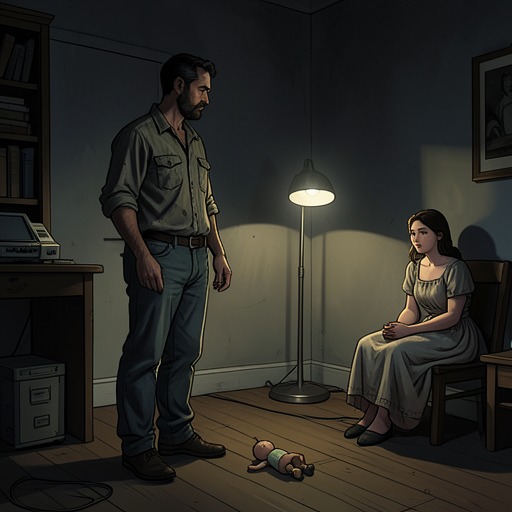
Sofia describes Albert’s terror at night. He thinks he hears bats outside the door and things rattling in the chimney; his heart beats so violently that he hears it as drums. Harpo goes upstairs on many nights to sleep beside him. Albert lies cramped in a corner of the bed, watching pieces of furniture as if they might move toward him, while the much larger Harpo holds his father in his arms. The reversal is intimate rather than triumphant: Albert, once the source of household authority, is frightened and dependent, and Harpo uses his strength to comfort rather than command.
Sofia says that seeing Harpo care for Albert allowed her to begin feeling for him again. Soon afterward, she and Harpo start work on a new house, though she makes clear that their renewed life together has not been easy. The account links reconciliation to changed behavior without presenting it as effortless or complete. Harpo’s capacity for tenderness toward his father does not erase his earlier attempt to rule Sofia; it helps make a different relationship with her possible.
Narrative Significance
Harpo’s arc is shaped by repeated contrasts between authority and care. At first, he treats Albert as the person who can tell him how to make Sofia obey, and his questions leave the unequal marital premise intact. Later, he acts without coercion: he enters Albert’s house to help, tends to his father, and stays beside him through the night. The same household world that taught Harpo to understand marriage as a contest over obedience also gives him a scene in which strength means sheltering someone vulnerable.
His return to Sofia is likewise presented through changed circumstances rather than a claim that the past has disappeared. The family dinner makes the cost of Sofia’s absence visible in the names and habits her children have acquired; the later rebuilding of a house indicates a new shared effort, not an effortless restoration. When Celie visits after Sofia’s mother has died, Sofia welcomes her warmly, and Harpo stares at Celie as though he has never seen her before. That greeting places him within a wider web of relationships: the narrative’s measure of change is not simply who is married to whom, but whether people can recognize one another beyond the roles and injuries that once governed their lives.